
Colorbond vs Tile Roofing in Melbourne: Which Is Right for Your Home?
On almost any Melbourne home, the choice comes down to Colorbond steel or tile. This is how they really stack up on cost, lifespan, weight, noise and looks.
The short answer
Colorbond and tile both work well on Melbourne homes. Colorbond is lighter, lower-maintenance and faster to install, while tile lasts longer, is naturally quieter and suits period homes. Which one wins comes down to your home's structure, budget, style and how much long-term maintenance you want to take on.
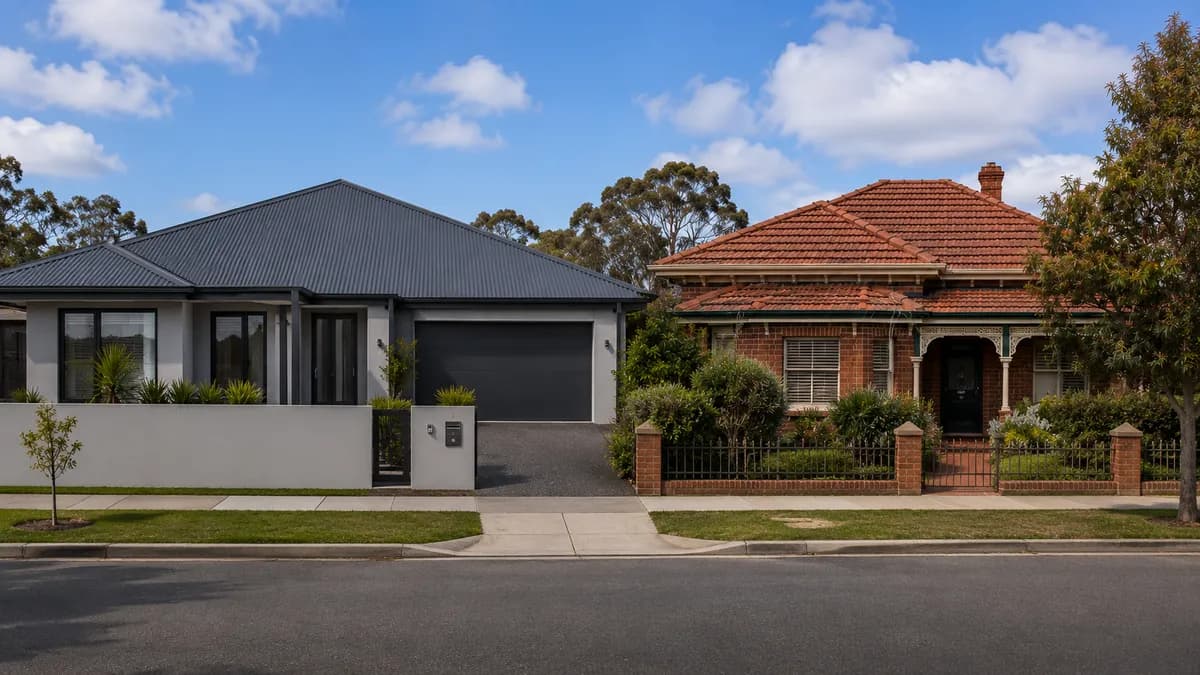
Re-roofing a Melbourne home nearly always comes down to two options: Colorbond steel or tiles. Both have proven themselves in Victorian conditions and both last decades when they go on properly. Walk down almost any street in Glenroy, Coburg or Pascoe Vale and you will see the two sitting side by side.
There is no single best roof. What suits you depends on your home's structure, your budget, the look you are after and how much maintenance you are willing to do. Here is how the two compare.
Which one is right for you?
Choose Colorbond steel if…
- You have a modern or contemporary home, or you're adding an extension
- You're converting a heavy tile roof and want less load on the structure
- You want the lowest possible ongoing maintenance
- You want a fast install with minimal disruption
- You're planning solar and want simple, tidy panel mounting
Choose tile if…
- You have a period, Federation or heritage home where character matters
- You want the longest possible lifespan from the roof itself
- You want quieter rooms in heavy rain without adding insulation
- You value cheap per-tile spot repairs down the track
- You'd rather restore than fully replace when the roof ages
Our recommendation: For most re-roofs on older Melbourne homes, Colorbond is the practical winner. For heritage and period streets, tile usually wins on character and council approval. When it's genuinely close, we base the call on your actual roof structure and a proper inspection, not a sales target.
Colorbond vs tile: full comparison
| Factor | Colorbond steel | Concrete / terracotta tile |
|---|---|---|
| Upfront cost | Comparable materials, often lower labour | Comparable materials, higher labour |
| Typical lifespan | 30 to 50 years | 50+ years (tiles themselves) |
| Weight | Light (~5 kg/m²) | Heavy (~40 to 50 kg/m²) |
| Wind resistance | Excellent when fixed correctly | Very good; tiles can dislodge |
| Fire resistance | Non-combustible steel | Non-combustible |
| Hail resistance | Can dent in severe hail | Can crack in severe hail |
| Corrosion (inland) | Coating resists rust well inland | Not applicable |
| Moss & lichen | Sheds growth; stays cleaner | Holds moss on shaded/older tiles |
| Ongoing maintenance | Very low, clean & check fixings | Periodic re-point & restore |
| Solar compatibility | Simple, tidy panel mounting | Doable; needs careful flashing |
| Installation time | Faster, large sheets | Slower, laid piece by piece |
| Spot repair cost | Sheet sections dearer to patch | Single tiles cheap to swap |
| Heritage suitability | Modern look; limited for period | Ideal for period & Federation |
| Noise in heavy rain | Quiet over sarking + insulation | Naturally quiet (thermal mass) |
| Thermal mass | Low | High, evens temperature swings |
| Summer heat | Light colours + reflective coatings help | Mass holds heat later into evening |
| Resale impact | Neutral-to-positive when done well | Neutral-to-positive when done well |
| Insurance | Standard; document storm damage | Standard; document storm damage |
How the two roofs compare on the factors Melbourne homeowners ask about most.
The quick verdict
Want low weight, a fast install and a modern look? Colorbond steel is usually the better pick. Want a traditional appearance, good thermal mass and the option to restore rather than replace later on? Tile is hard to beat.
For most re-roofing jobs on older Melbourne homes, Colorbond wins on practicality. For heritage-style and period homes, tile usually wins on character and council appeal.
Cost: upfront and over time
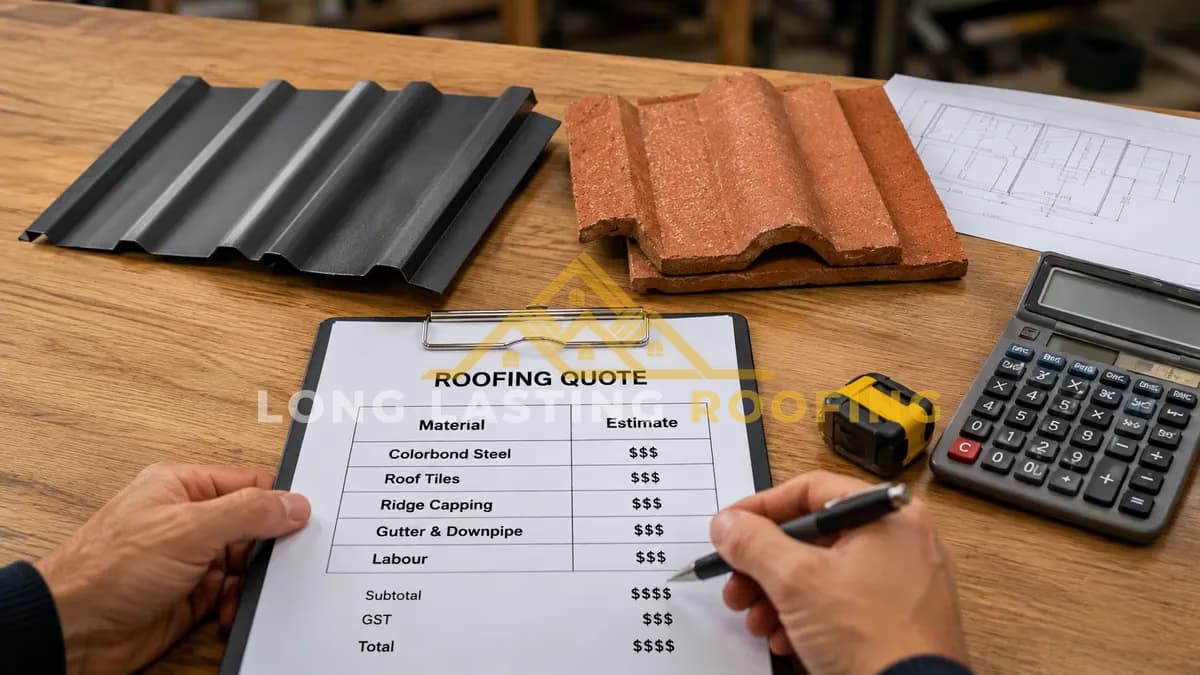
Colorbond and tile sit in a similar ballpark on supply, but labour and structure change the picture. Colorbond sheets are lighter and faster to lay, so labour can be lower on a straightforward roof. Tiles are heavier and slower to install, but a single tile is cheap to replace if a few break.
Over 30 years a tile roof will need its ridge capping re-bedded and re-pointed, plus the occasional restoration. Colorbond needs very little beyond a clean and a check of the fasteners and flashings. Look at the long-term maintenance, not just the install price.
Lifespan and durability
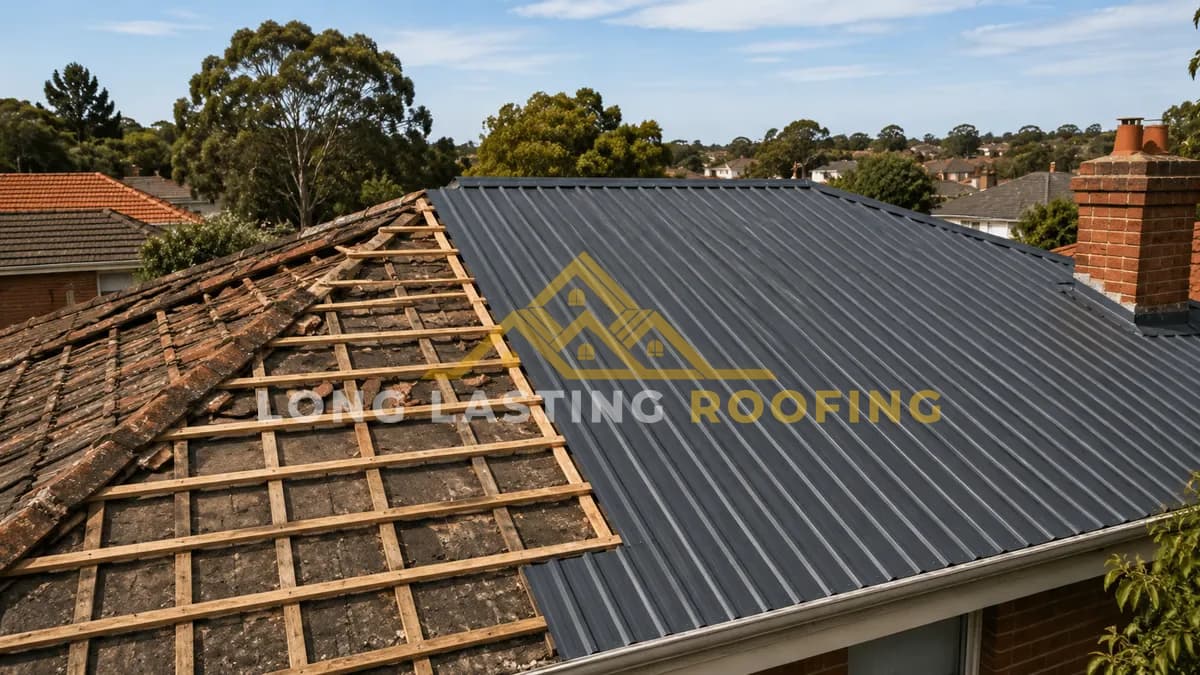
A quality Colorbond roof commonly lasts 30 to 50 years in Melbourne, with the coating doing the work against corrosion. Coastal salt air shortens that, but the north-west suburbs are inland enough that corrosion is rarely the limiting factor.
Concrete and terracotta tiles can last 50+ years, and terracotta in particular is very long-lived. The catch is the mortar bedding and pointing that hold the ridge caps. It does not last as long as the tiles. That is why an older tile roof can look tired while the tiles are still sound. It usually needs restoration, not replacement.
Weight, structure and re-roofing
This is the factor people forget. Tiles are several times heavier than steel. If you are converting an old tile roof to Colorbond, the lighter load is a real advantage and rarely a structural problem. Going the other way, steel to tile, can mean the roof structure has to be checked or upgraded to carry the extra weight.
On homes with existing structural movement or older timber, the lighter Colorbond option removes a variable. A roofer should always assess the existing frame before recommending a switch.
- Trusses and rafters, sized for the original roof's weight; adding tile weight may exceed their rating.
- Battens, the timber the roof fixes to; often renewed when switching materials.
- Sarking, the membrane under the roof; adds waterproofing and quietens steel.
- Roof pitch, some profiles need a minimum pitch to shed water properly.
- Wind loading, coastal and exposed sites need fixings specified for higher wind.
Noise, heat and comfort
The rain-on-a-tin-roof worry is real but fixable. Modern Colorbond laid over sarking and good insulation is far quieter than the bare sheds people remember. Tiles are naturally quieter and have more thermal mass, which helps even out temperature swings.
For summer heat, light Colorbond colours with reflective coatings and proper roof-space ventilation do very well. Tile holds heat longer into the evening. For day-to-day comfort, insulation and ventilation matter more than the material itself.
Looks and resale
Colorbond suits contemporary, minimalist and extension-style designs, with a wide modern colour range and clean lines. Tile suits period, Federation and traditional brick homes. In some streets a tile roof just looks right for the area.
Neither hurts resale when done well. A clean, leak-free roof in a colour that suits the house is what adds value. Buyers react to condition far more than material.
- Choose Colorbond for: modern designs, lightweight re-roofs, low maintenance, fast installs.
- Choose tile for: period and heritage homes, maximum lifespan, quieter rooms, easy spot repairs.
Roof cost breakdown
There's no single "price" for a roof, a real quote depends on your roof's size, pitch, access and condition. These are the line items that actually move the number, so you can compare two quotes properly instead of just the bottom figure.
- Roofing material
- Colorbond sheets or concrete/terracotta tiles. Similar ballpark on supply.
- Removal & disposal
- Stripping and tipping the old roof, heavier for tile.
- Labour
- Colorbond is usually faster to lay; tile is slower and more labour-intensive.
- Scaffolding & access
- A bigger factor on two-storey and steep-pitch roofs.
- Sarking
- The waterproof membrane under the roof, quietens Colorbond and adds a second water barrier.
- Battens
- Often renewed on older roofs or when switching materials.
- Flashings, ridge caps & valleys
- The detail work that actually stops leaks. Skimping here shows up later.
- Insulation & ventilation
- Optional, but this is what drives comfort and energy bills, worth costing.
- Gutters & downpipes
- Frequently done at the same time while access is set up.
- Permits & compliance
- Where required by your council or overlay.
- Long-term maintenance
- Tile needs periodic re-pointing and restoration; Colorbond needs very little.
Compare total 30-year ownership, not just the install price, a cheaper tile install can cost more over time once re-pointing and restoration are added in. For real numbers on your roof, book a free inspection.
Melbourne climate: what actually matters
Melbourne's weather is hard on roofs in a very particular way, and it should shape your choice. Here's what actually matters locally.
Fast-moving storms & wind
Melbourne can swing from calm to damaging wind in an hour. Both roofs cope well when installed correctly, the fixings, flashings and ridge work matter more than the material.
Heavy downpours
Short, intense rain tests drainage. Colorbond sheds water fast; tile relies on sound pointing and valleys. Blocked gutters cause more "roof" leaks here than the roof itself.
Summer UV & heat
Long, hot days fade dark roofs over time. Light Colorbond colours and reflective coatings help; tile's thermal mass holds heat later into the evening.
Hail
Severe hail can dent steel and crack tiles. Neither is immune, so good insurance documentation matters more than the material.
Gum trees & leaf debris
Melbourne's gums drop leaves and bark year-round. On tile and in gutters this feeds moss and blockages, leaf guard and regular cleaning help both roof types.
Moss on shaded roofs
South-facing and tree-shaded roofs grow moss, especially on older tiles. Colorbond sheds growth more readily; tile needs periodic cleaning.
Inland vs coastal
The north-west suburbs, Glenroy, Coburg, Broadmeadows, are inland enough that salt corrosion rarely limits Colorbond. Bayside homes need to weigh coastal salt more heavily.
Long-term maintenance timeline
Neither roof is "fit and forget". Here's a realistic maintenance rhythm so you can plan ahead and budget for it.
Year 1
Post-install inspection: check fixings, flashings and that gutters run clear.
Every 1 to 2 years
Clean gutters and downpipes, critical before storm season, for both roof types.
Year 5
Colorbond: check fasteners and coating. Tile: check for slipped or cracked tiles.
Year 10
Colorbond: re-check fixings and flashings. Tile: inspect ridge pointing for cracks.
Year 15
Tile: re-bed and re-point ridge capping as needed. Colorbond: minor coating touch-ups if any.
Year 20
Tile: full restoration often due (clean, re-point, re-seal, re-coat). Colorbond: usually still sound, clean and inspect.
Year 30+
Tile: second restoration or plan replacement. Colorbond: assess coating; often has years left.
Not sure which way to go?
Book a free, no-obligation roof inspection. We look at your roof and structure, then give you a straight recommendation, restore, re-roof or convert, in writing.
Common roofing mistakes
Choosing on install price alone
A cheaper tile install can cost more over 30 years once re-pointing and restoration are added. Compare total ownership.
Ignoring insulation and ventilation
Comfort and energy bills depend more on insulation and roof-space airflow than on the roofing material itself.
Switching materials without a structure check
Tile-to-steel is usually fine (lighter), but steel-to-tile adds weight your frame may not be rated for. Always assess first.
Picking a roof colour without thinking about heat
Dark roofs absorb more summer heat. In Melbourne's hot spells, colour choice has a real comfort impact.
Skipping the pre-quote inspection
A quote from the footpath misses hidden damage, ridge and valley condition, and structural issues. Insist on a proper look.
Overlooking council and heritage rules
Some period streets and overlays restrict roof materials and colours. Check before you commit.
Using the wrong flashing material
Mismatched metals and poor flashings cause leaks and corrosion no matter how good the sheets or tiles are.
Neglecting the gutters
Most "roof" leaks in Melbourne storms are really gutter overflow. Clear gutters protect either roof.
Tired tile roof → the restore-or-convert decision
This is a job we run into all the time across the north-west suburbs. A Glenroy home has a 35-year-old concrete tile roof. The tiles themselves are still sound, but the ridge-cap mortar has cracked and let water track in during storms, leaving a brown stain on a bedroom ceiling.
There are two honest paths. If the owner wants to keep the traditional look, a restoration will do it: re-bedding and re-pointing the ridges, swapping a few slipped tiles, cleaning and re-sealing. That makes the roof weather-tight again for a fraction of a full re-roof. If they would rather cut future maintenance and modernise the look, converting to Colorbond drops the structural load, speeds up drainage and needs far less upkeep.
You only know which way to go by getting up there and looking, which is exactly what our free assessment is for.
How we decide what your roof needs
When you book a free assessment, here's exactly how we land on a recommendation, the same process whether it points to restore, re-roof in tile, or switch to Colorbond.
Inspect on the roof and inside the roof cavity, tiles or sheets, ridge bedding, valleys, flashings and timber condition.
Check the roof pitch, since some materials and profiles suit low or steep pitches better.
Assess the existing structure, trusses, rafters and battens, before recommending any material change.
Talk through your budget and how long you plan to stay in the home.
Factor in the style of the house and street, plus any council or heritage overlays.
Check ventilation and insulation, since they drive comfort more than the roof material does.
Consider future plans like solar, so the roof is ready for it.
Give you a straight recommendation and a written quote, including when the honest answer is a smaller restoration, not a full re-roof.
The Long Lasting Roofing Team
Melbourne roofing specialists · Updated 20 June 2026
Not sure which roof suits your home?
Get a free, no-obligation assessment. We look at your roof and structure and give you a straight recommendation, not a sales pitch.
Comparison, Common Questions
Answers to the questions homeowners ask about this topic.
They are often comparable on materials. Colorbond can be cheaper to install on a straightforward roof because the sheets are lighter and faster to lay. Tile is cheaper for small spot repairs. Compare total cost over time, including the re-pointing and restoration a tile roof eventually needs.
Yes, and it is a common upgrade. Colorbond is much lighter than tile, so the existing structure almost always handles the reduced load fine. A roofer should still inspect the frame, battens and sarking before quoting the conversion.
Both perform well inland. Colorbond handles wind and fast weather changes well and sheds water quickly. Tile offers thermal mass for temperature swings. For storm-prone exposure, the quality of the installation, flashings and fixings matters more than the material.
The tiles themselves can outlast Colorbond, 50+ years for concrete and terracotta versus roughly 30 to 50 for Colorbond. The catch is that a tile roof's mortar bedding and pointing wear out well before the tiles, so it needs periodic restoration to reach that lifespan. Colorbond needs far less to get through its life.
Not the way the old tin sheds were. Modern Colorbond laid over sarking with proper insulation is much quieter, though tile is still naturally quieter thanks to its thermal mass. If quiet rooms are a priority, insulation makes more difference than the roof material itself.
Both work well when the roof space is insulated and ventilated. Light Colorbond colours with reflective coatings reject heat during the day; tile holds heat longer into the evening thanks to its mass. Colour choice and roof-space ventilation matter more for comfort than the material you pick.
Yes. Colorbond makes panel mounting simple and tidy, which is why installers often prefer it. Tile is also fine but needs careful flashing around the mounts to stay watertight. If solar is on your plan, mention it when you get your roof quoted so it's set up correctly.
Often not for a like-for-like re-roof, but heritage overlays and some period streets do restrict materials and colours. Switching between tile and Colorbond can also have planning implications. Always check your council's requirements before committing, we can point you in the right direction.
Tile usually suits period, Federation and traditional brick homes best, both for character and for council approval in heritage areas. Colorbond suits contemporary designs and extensions. In some streets a tile roof simply looks right for the area.
A straightforward Colorbond re-roof is often quicker because the large sheets go on fast; tile is slower as it's laid piece by piece. Weather, roof size, pitch and access all affect the timeline. We give you a realistic schedule with your quote so you can plan around it.
A clean, leak-free roof in a colour that suits the house is what buyers react to, condition far more than material. Neither Colorbond nor tile hurts resale when the job is done well; a visibly tired or leaking roof is what drags a sale.
Colorbond, comfortably. Beyond keeping gutters clear and an occasional clean and fixing check, it needs very little. Tile needs its ridge capping re-bedded and re-pointed over time, plus the occasional restoration, which is ongoing cost and effort.